

FORT LAUDERDALE, FLA. (WSVN) - As South Florida prepares for rising sea levels, a new startup has fortified the state’s seawalls to better prepare it for the future.
Climate change has threatened coastal communities around the world, South Florida is showing how to build to adapt preparing ways to better withstand rising waters, worsening storms, saltwater intrusion, heat heaves and other climate impacts.
“In South Florida, we’ve already bought into a certain amount of extreme flooding and extreme heat, and how we adapt is going to be an interesting question, but also an interesting transition,” said Florida Atlantic University School of Architecture Professor Jeffrey Huber.
Global average temperatures have climbed due to fossil fuel emissions, which has also caused the sea level to rise, in turn making low-lying coastal cities across South Florida vulnerable to flooding.
Living in Miami Beach, Anya Freeman recalls running home to move her car before strong storms moved in to prevent the storm surge from flooding her car. She wasn’t able to get car insurance for flooding.
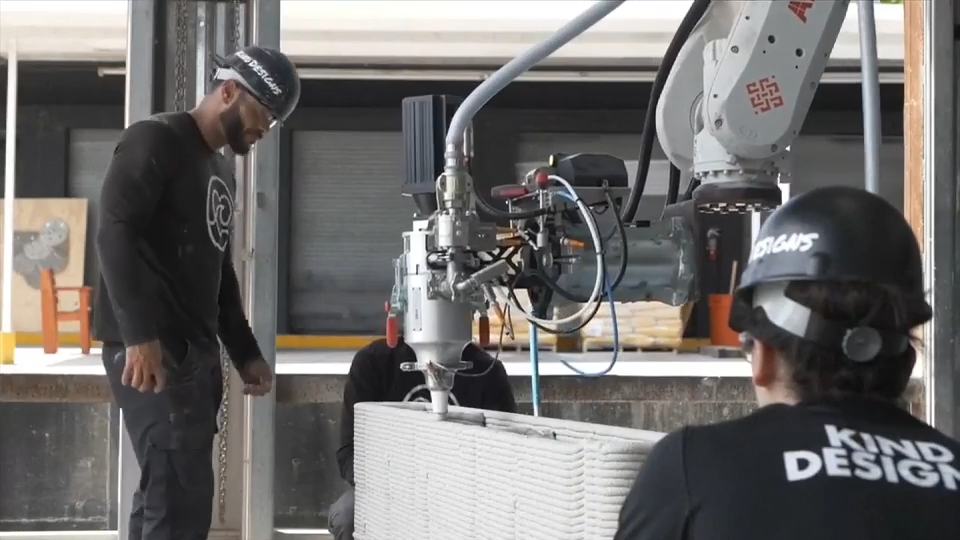
So in 2024, she left her full time job as a lawyer to launch “Kind Designs,” a startup which creates 3D-printed living seawalls to protect shorelines from flooding.
She says while traditional seawalls are flat, the company’s are designed to mimic natural coastal features like mangrove roots found in South Florida.
“We can mimic it to attract native species, create caves for them to hide from predators,” said Freeman.
Since their inception, they have installed 16 living seawalls across the state for residential, commercial and government clients, she said.
Freeman said her company will soon expand to install seawalls in California, New York and fortify coastal bases for the U.S. Navy.
About 30 miles north from Kind Designs’ headquarters, a former parking lot was transformed into a public space that doubles as flood infrastructure. DC Alexander Park in Fort Lauderdale also features a 25-foot artistic overlook that provides shade on hot days.
“There’s a testing ground to really showcase and demonstrate how a community can thrive, not just survive, but thrive under these challenges that we’re going to see that are going to essentially change the built environment extremely over the next 100 years,” said Huber.
Along the park’s perimeter, a native maritime forest absorbs rainfall and saltwater flooding while providing recreational opportunities and a habitat for species.
Copyright 2026 Sunbeam Television Corp. All rights reserved. This material may not be published, broadcast, rewritten or redistributed.